Getting a California dealer license can feel overwhelming, but the process becomes much easier when you understand each step. SoCal Dealer Training helps future California dealers complete the required dealer education and prepare for the next stage of the licensing process.
Whether you plan to become a retail dealer, wholesale dealer, or add dealer services to an existing business, this guide walks you through the major steps involved in getting licensed in California.
Step 1:
Complete the DMV-Approved Pre-Licensing Course
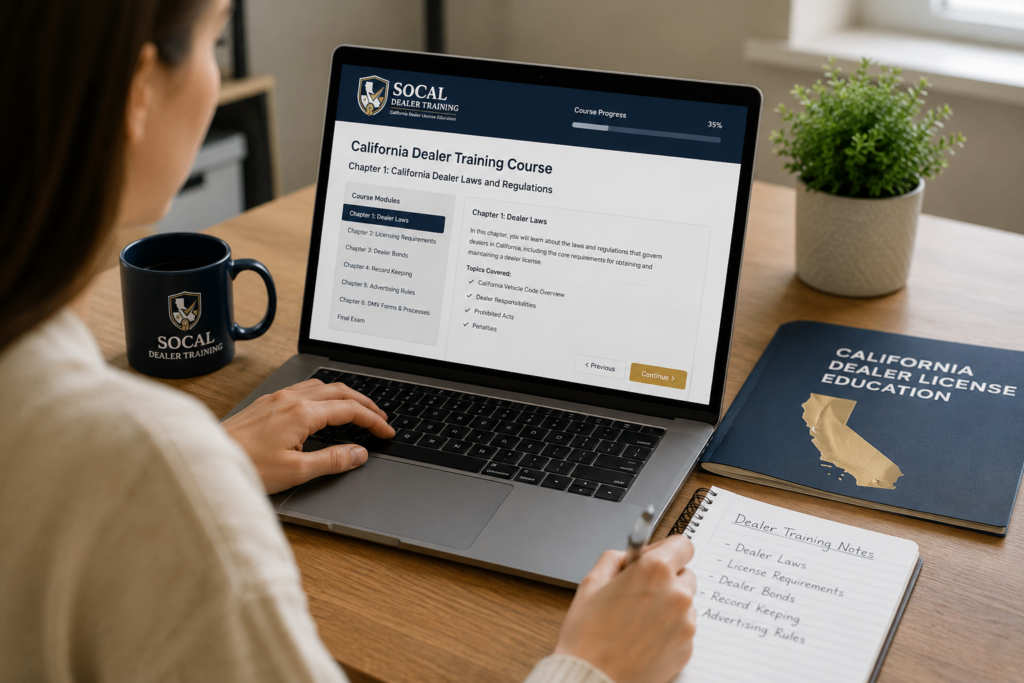
Complete the required California DMV-approved dealer education course. Upon successful completion, you will receive a Certificate of Completion, which must be included with your dealer license application.
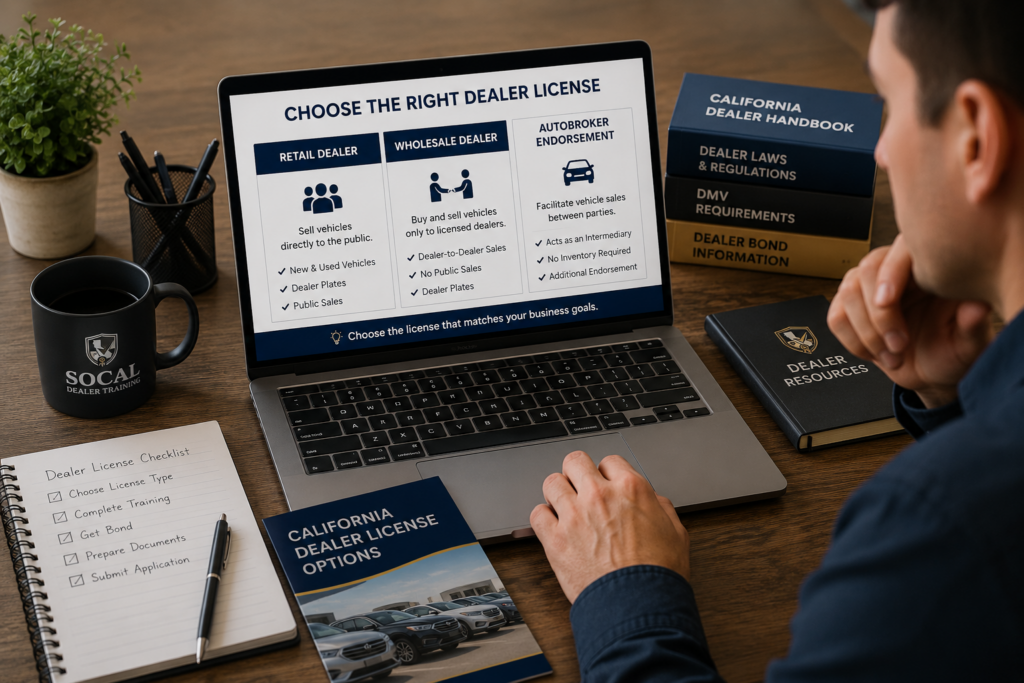
Determine whether you will apply as a Retail Dealer, Wholesale Dealer, or Retail & Wholesale Dealer. Your license type may affect your location requirements, dealer bond requirements, and business operations.
Establish your dealership as a Sole Proprietorship, Partnership, Corporation, or Limited Liability Company (LLC). This creates the legal structure for your dealership and is required before completing many other licensing steps.
Step 4:
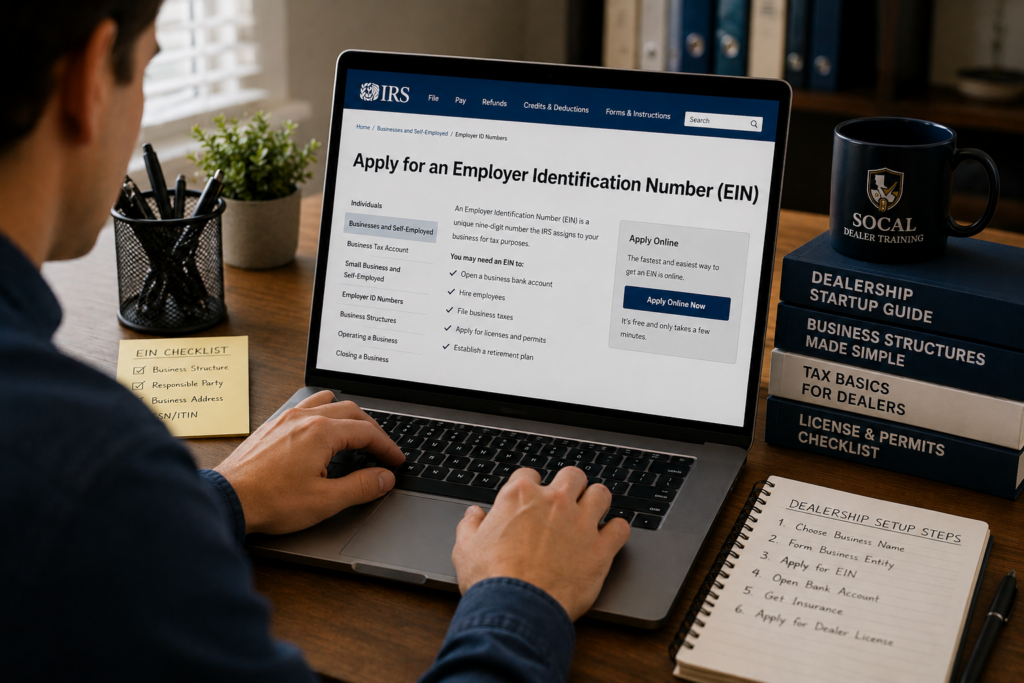
Obtain an Employer Identification Number (EIN)
Apply for an EIN through the IRS if required for your business structure. This number is commonly used for banking, payroll, tax reporting, and dealership operations.
Step 5:
Secure a Business Location
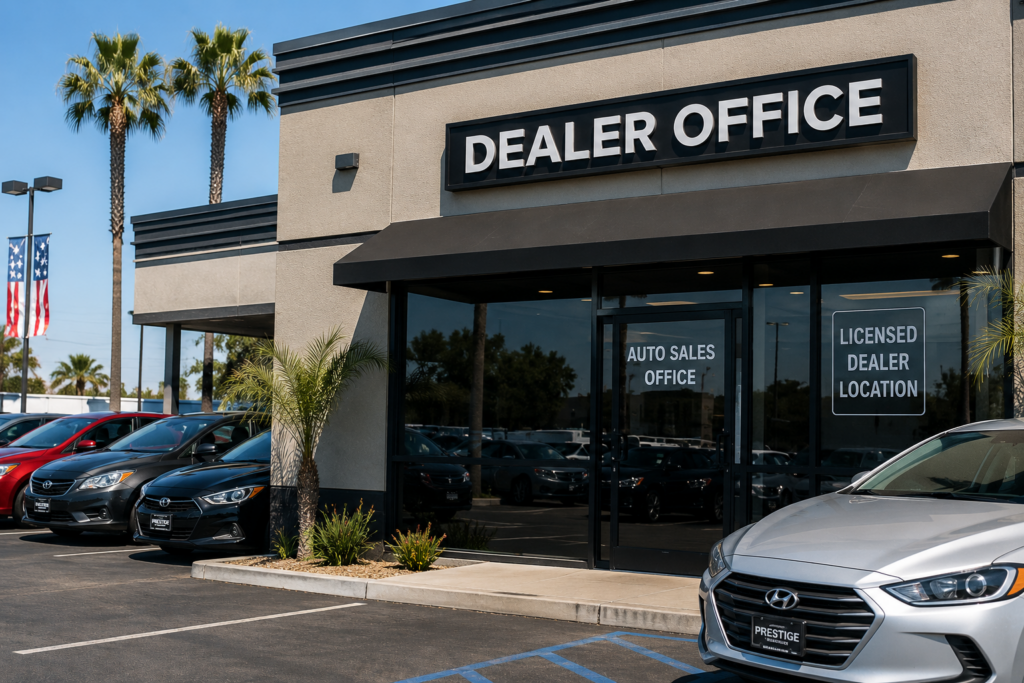
Obtain a business location that complies with California DMV requirements. Retail dealers generally require an office and display area, while wholesale dealers may qualify with an office-only location.
Step 6:
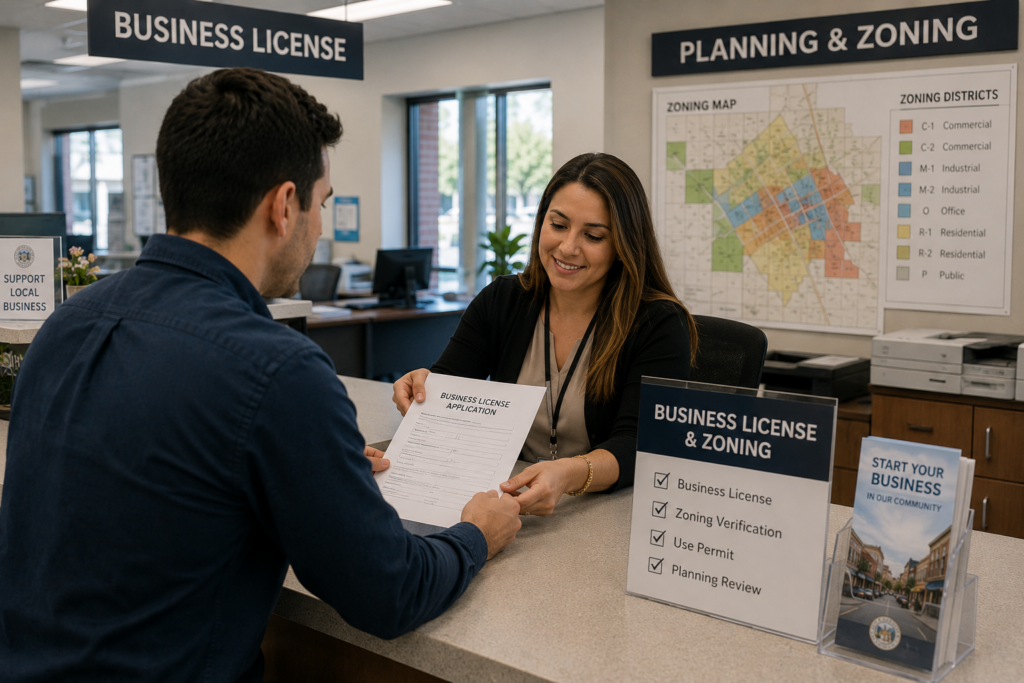
Obtain a Business License and Verify Zoning
Contact your local city or county to obtain a business license and verify that your proposed location is properly zoned for dealership activities.
Step 7:
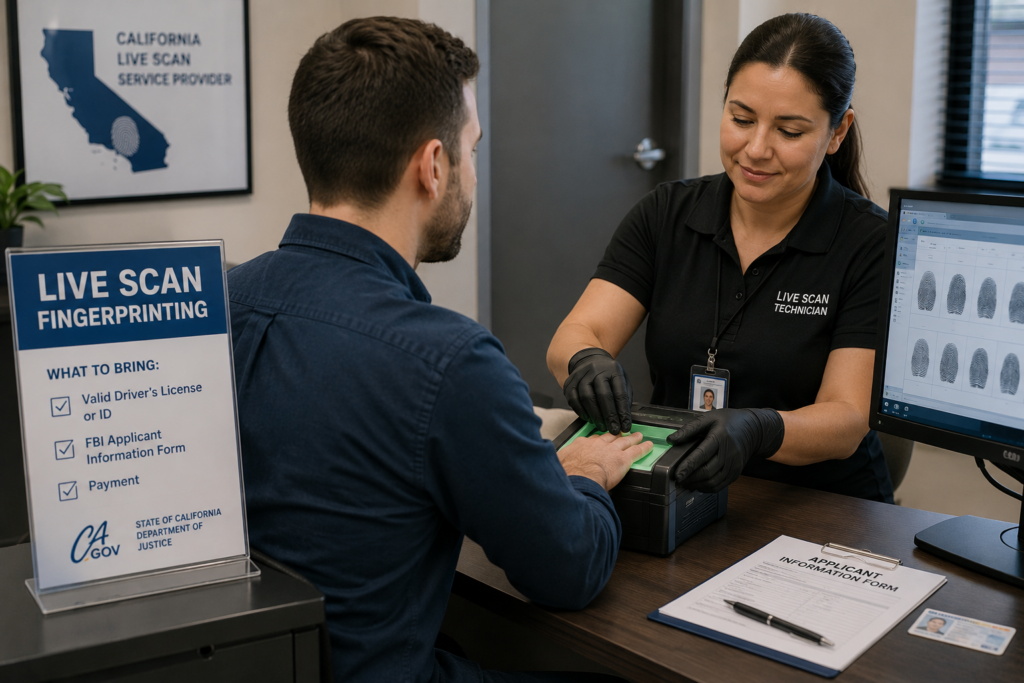
Complete Live Scan Fingerprinting
Schedule a California Live Scan background check. DMV will review your criminal history as part of the licensing process.
Step 8:
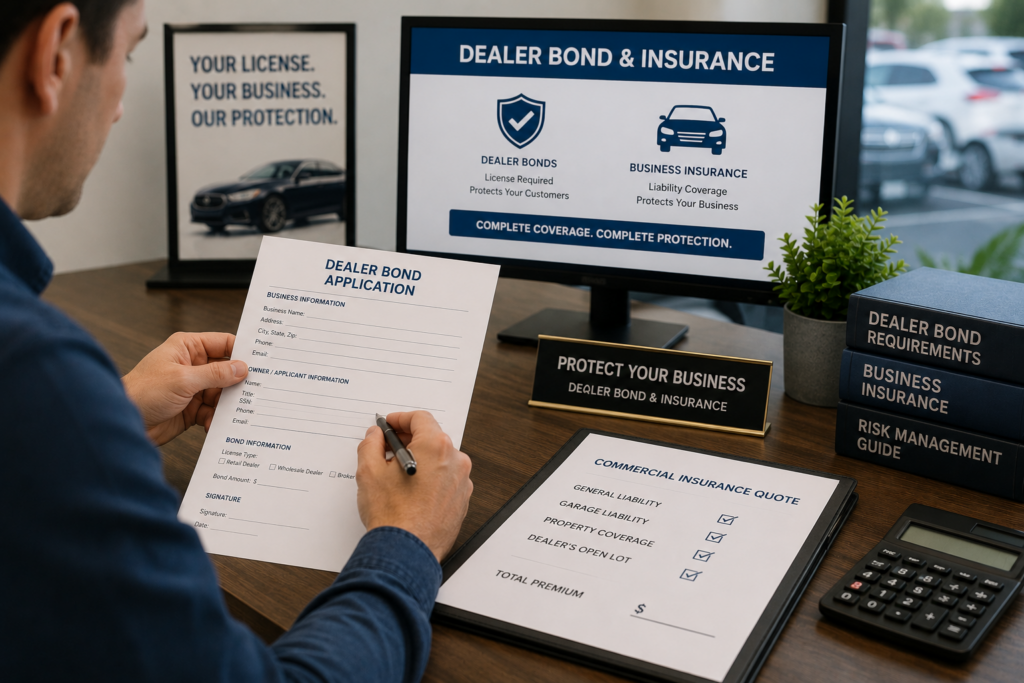
Purchase Your Dealer Bond and Insurance
Obtain the required California dealer bond and any required insurance coverage. Bond requirements vary depending on the type of dealer license being requested.
Step 9:
Apply for a Seller’s Permit
Register with the California Department of Tax and Fee Administration (CDTFA) to obtain a Seller’s Permit, allowing you to collect and remit sales tax.
Step 10:
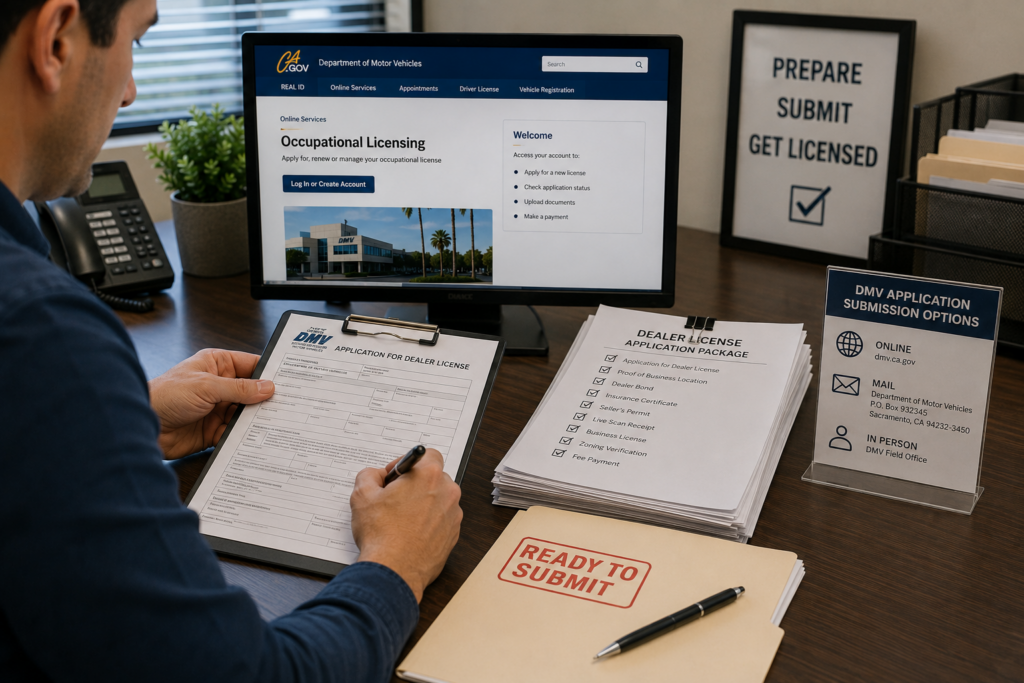
Prepare and Submit Your DMV Application
Complete all required DMV Occupational Licensing forms and submit your application package, supporting documents, fees, fingerprints, bond information, and business documentation.
Applicants for most dealer license types must pass the DMV Occupational Licensing examination before a license can be issued.
Step 12:
Complete Your DMV Inspection and Receive Your License
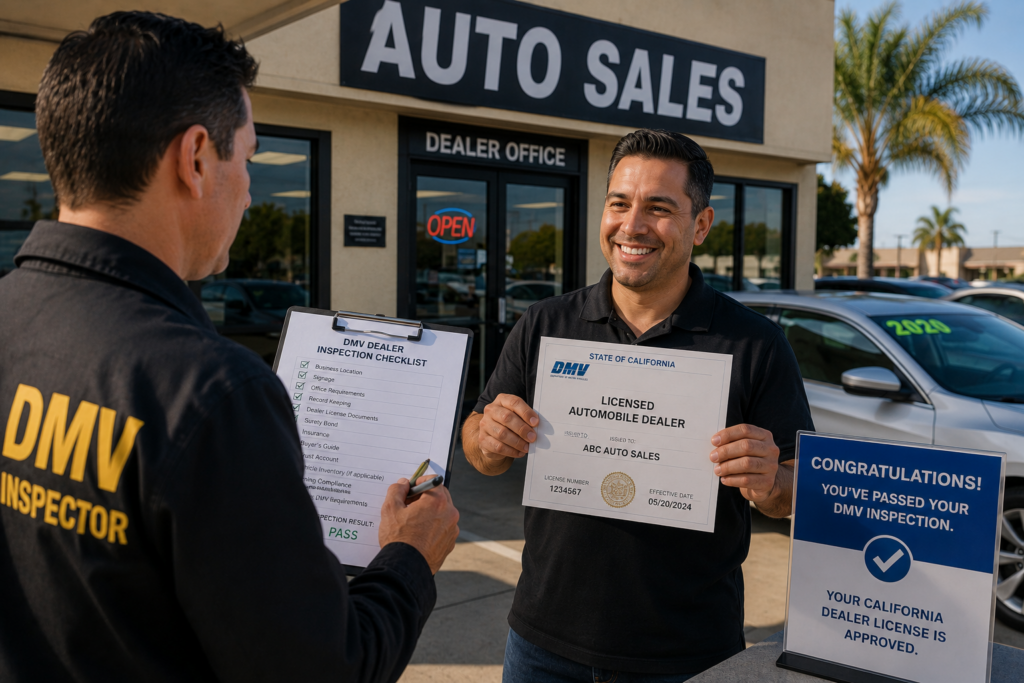
DMV will conduct an inspection of your dealership location to verify compliance with licensing requirements. Once approved, your California Dealer License will be issued and you may begin operating your dealership.